Landscape Lighting Trends: Solar Mushroom Lights Analysis
 Maya ChenContributing Editor
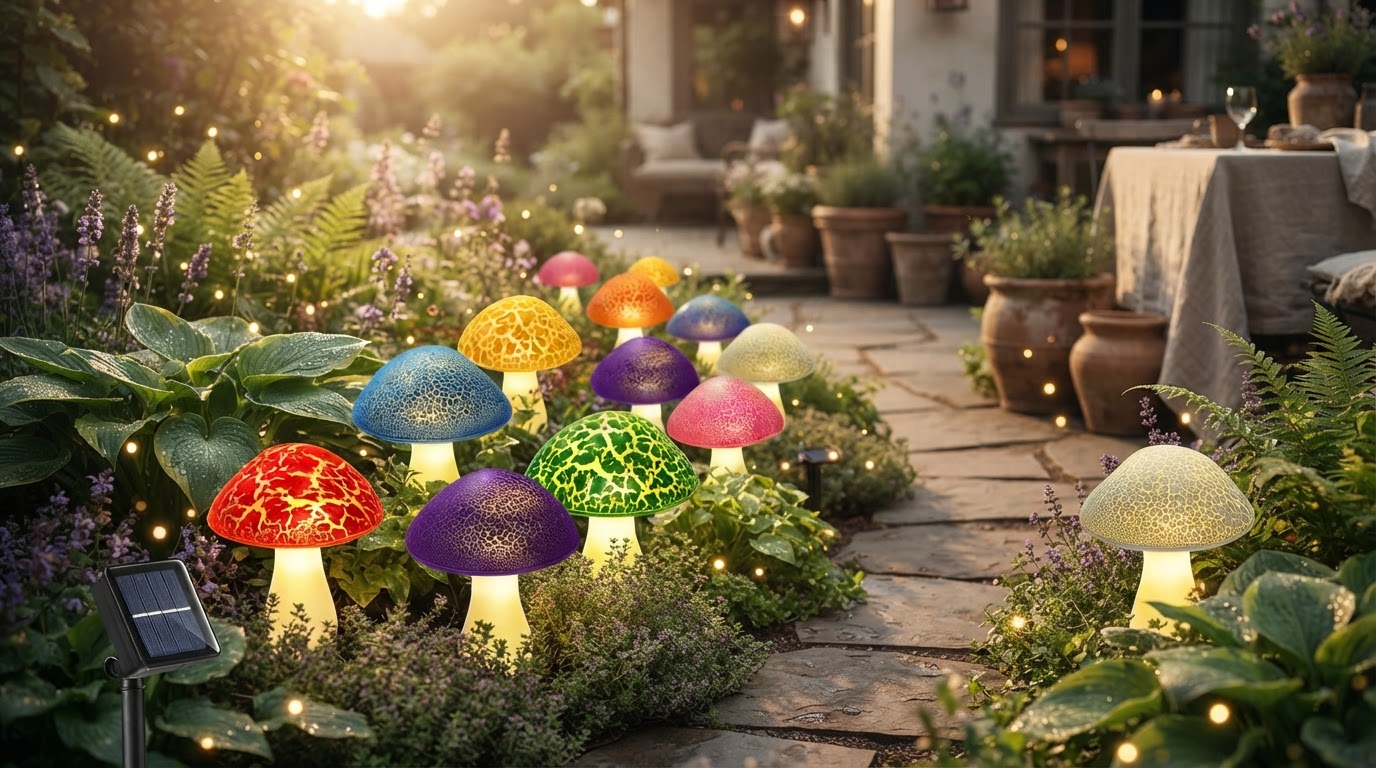
August 8, 2026 — The seasonal surge in decorative garden illumination has centered on multi-unit solar arrays as homeowners seek low-cost aesthetic upgrades. Solar Mushroom Lights, featuring eight crackle-glazed caps powered by a single IP65-rated solar spike, have become the focal point of this shift toward integrated, battery-free outdoor lighting systems.
The conventional wisdom says that more lights equal better coverage, but the engineering of eight units sharing one photovoltaic source suggests a potential bottleneck in energy distribution. While 22Words reports these units provide year-round reliable lighting without electricity, the math often fails to account for the diminished charge capacity during winter months or in shaded north-facing gardens. Here's the part nobody talks about: a single solar panel must generate enough voltage to illuminate eight separate LEDs—red, orange, yellow, green, blue, purple, pink, and warm white—simultaneously.
Photo by quang vinh on Pexels
Creative Gardening enthusiasts have historically resorted to DIY solutions, such as crafting pathway lights from cement and recycled stakes to ensure durability. However, the current market trend favors the convenience of the Solar Mushroom Lights setup. When analyzing the summer garden trend, the appeal lies in the lack of manual switches or external battery replacements. For those attempting a fairy core solar garden lights setup, the crackle glaze finish provides a specific diffusion of warm light that is difficult to replicate with standard Dollar Tree solar lights, which Elm Creek Landscape suggests are better suited for lining basic garden paths.
Expert tip: To maximize the lifespan of an IP65-rated multi-light string, avoid burying the shared wire deeper than two inches. Soil acidity can degrade the protective casing faster than UV exposure, leading to voltage drops across the eight-light sequence.
Integrating these units requires more than just placement; it requires a 3-point framework for visual balance. Designers often use these to enhance fairy garden decor by grouping the eight colors in clusters rather than linear rows, which masks the single-wire limitation. While these are frequently cited as essential for cottagecore garden landscapes, the long-term lumens-per-watt efficiency remains unproven compared to dedicated single-panel stakes.
I'll change my mind when long-term testing proves that a single small-form-factor solar spike can maintain 100% brightness across all eight color spectrums for more than six hours after a standard eight-hour charge cycle.