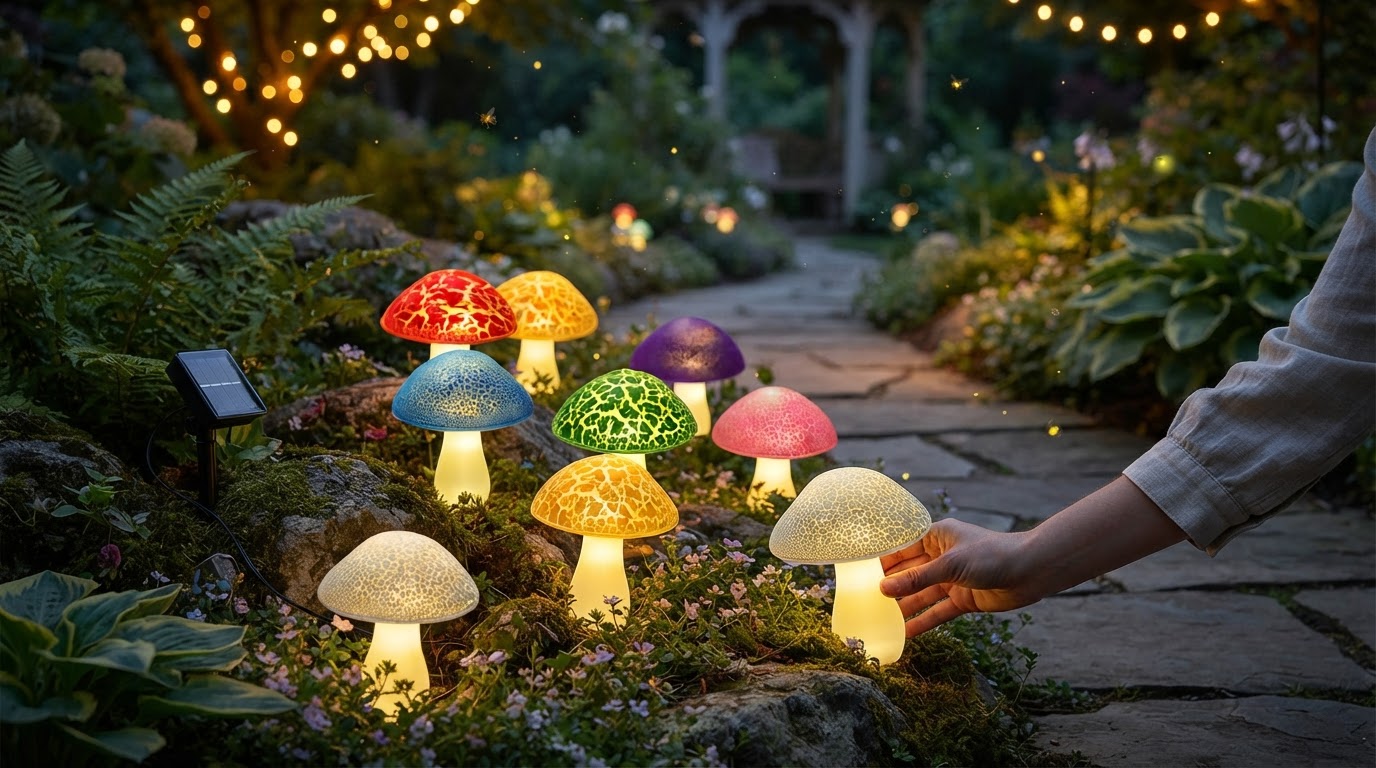
How do Solar Mushroom Lights function in garden design?
 Priya RamanSenior Analyst
September 27, 2026 — Solar Mushroom Lights function as low-voltage, decentralized illumination systems that utilize photovoltaic cells to convert sunlight into ambient pathway or accent lighting.
Homeowners and landscape architects prioritize these fixtures to achieve whimsical aesthetic goals without the infrastructure costs of hardwired systems. Think of it as a matrix of functional utility versus aesthetic impact, where the success of the installation depends on balancing light temperature with spatial density. Understanding the technical limitations and placement logic is essential for creating a cohesive nightscape that remains operational throughout the seasons.
How does weather resistance affect Solar Mushroom Lights performance?
Weather resistance determines the longevity and light consistency of the fixtures, specifically through the ingress protection (IP) rating of the internal circuitry. The decision rule: prioritize units that explicitly state their sealing method for the battery compartment and LED housing. According to specifications from Terrain, their Stargazer Nature Effects Solar Mushroom Lights are designed as waterproof strands with 10 mushrooms spaced 12 inches apart, ensuring that moisture does not disrupt the connection between the solar panel and the light string. This spacing and sealing allow the lights to maintain a charge in full sun and remain functional during rainfall. High-quality waterproof solar mushroom stakes are necessary for ground-level installations where soil moisture and irrigation systems are present. Without adequate sealing, the internal components are prone to corrosion, which significantly reduces the battery life cycle.
What are the primary placement strategies for Solar Mushroom Lights?
Two axes matter here: the proximity to the ground and the density of the light cluster. Placement strategies typically fall into either linear border marking or organic cluster grouping to mimic natural fungal growth. Once you see it this way, you can choose between using mini mushroom solar lights for planters to highlight specific containers or using larger toadstool garden lights solar for broad ground coverage. A common DIY approach involves using inexpensive round light covers to create custom shapes, as demonstrated by Liz Fenwick DIY, who utilizes budget-friendly components to achieve specific visual heights. For large-scale outdoor mushroom garden lights, the placement must account for the solar panel's access to unobstructed sunlight, as even partial shading from overhanging foliage can reduce evening runtimes by up to 50%. Effective design uses these lights as secondary layers rather than primary safety lighting, focusing on the visual texture they add to flower beds and walkways.
Quick answers
Q: How long do Solar Mushroom Lights typically stay illuminated? A: Most standard models, such as those from Terrain, provide approximately 6 to 8 hours of light after a full day of charging in direct sunlight. Performance varies based on the battery capacity, often around 600mAh to 1200mAh.
Q: Can Solar Mushroom Lights change colors automatically? A: Yes, specific models like the WMSS27006 Mushroom LED light feature a dual lighting mode that includes automatic color-changing sequences. This functionality is powered by an integrated sensor that triggers the LED at dusk.
Q: Are Solar Mushroom Lights suitable for small container gardens? A: These fixtures are highly effective for small spaces, particularly when using mini mushroom solar lights for planters that are scaled to fit within a 6-inch to 12-inch diameter pot. Their low-profile design prevents them from overwhelming small plant arrangements.
Learn more about Solar Mushroom Lights at https://solyramushroomlights.com.
Sources
- Stargazer Nature Effects Solar Mushroom Lights - Terrain
- DIY mushroom solar lights! ☀️ | Liz Fenwick DIY - Facebook
- Mushroom Led Color Changing Solar Powered Garden Light - WMSS27006