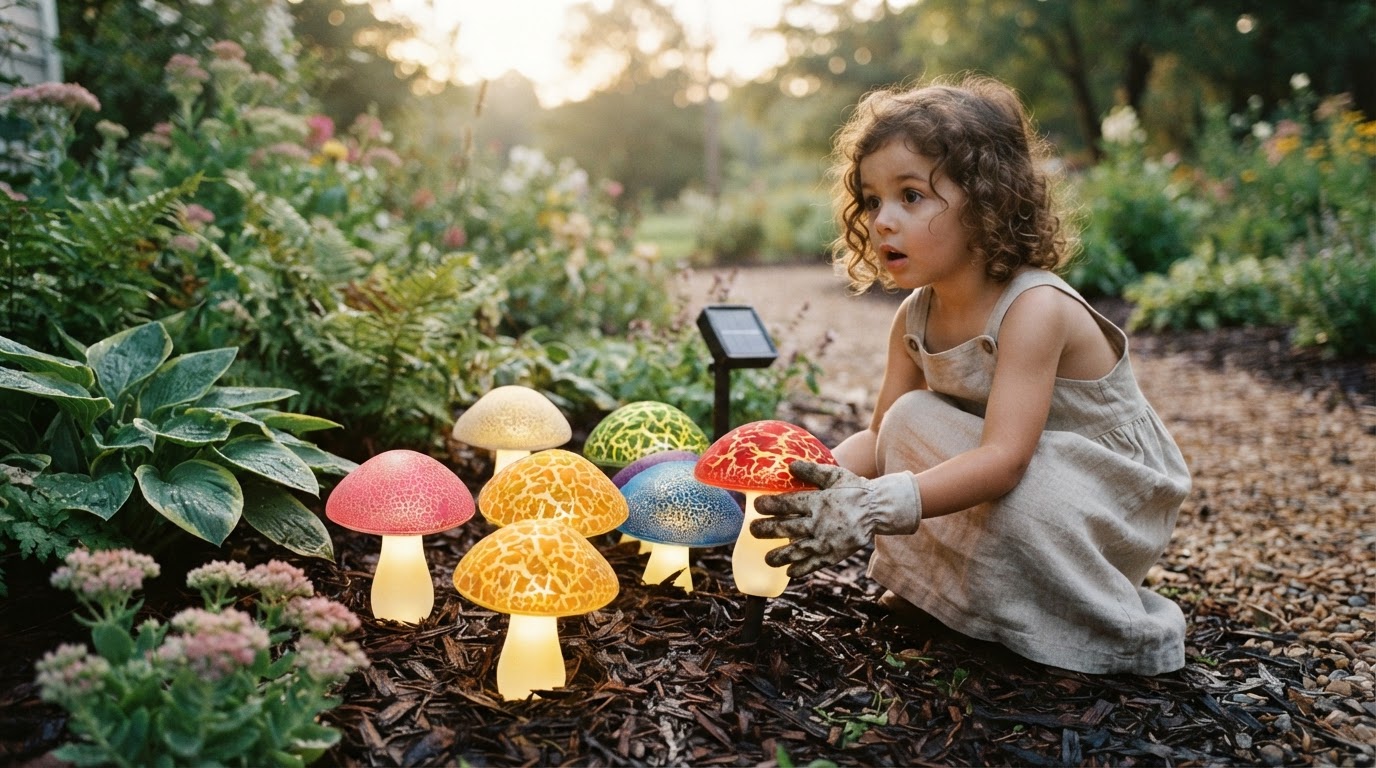
5 Steps to Installing Outdoor Mushroom Garden Lights
 Jordan HaleStaff Writer
September 28, 2026 — The rise of whimsical landscape aesthetics has brought Solar Mushroom Lights to the forefront of modern backyard design. I spent yesterday evening kneeling in the damp mulch of my perennial bed, testing how these organic shapes interact with the shadows of low-growing ferns. According to Best Pro Lighting, these specialized fixtures are designed to illuminate pathways and cast a unique ambiance that standard floodlights simply cannot replicate. The first thing I noticed was how the soft glow mimics the natural scattering of light found on a forest floor, rather than the harsh glare of industrial security lamps.
The 5-Step Placement Strategy
Setting up these fixtures requires more than just pushing a stake into the dirt; it requires an understanding of light saturation and soil density. I start by identifying high-traffic zones where the ground is firm enough to support the stake without leaning. It turns out that the most effective installations utilize a staggered formation, placing one light every three feet to create a continuous visual thread along a walkway. When working with [waterproof solar mushroom stakes](/blog/waterproof-solar-mushroom-stakes), I ensure the base is flush with the soil to prevent moisture pooling around the internal seals. For those integrating [toadstool garden lights solar](/blog/toadstool-garden-lights-solar) into existing masonry, I recommend pre-drilling a pilot hole in hard-packed clay to avoid snapping the resin stems. The charging process relies heavily on unobstructed southern exposure; even partial shade from a deciduous tree can reduce the active runtime by several hours. In my own garden, I found that placing mini mushroom solar lights for planters near reflective surfaces, like glazed ceramic pots, doubled the perceived brightness without increasing the energy draw. Understanding [how do solar mushroom lights function](/blog/how-do-solar-mushroom-lights-function) within a larger ecosystem means balancing these decorative elements with functional safety lighting. The dual-lighting features found in models like the WMSS27006 allow for automatic color changes, which I prefer to reserve for accent areas rather than primary paths.
Expert tip: To maintain the IP rating and prevent cloudy lenses, I wipe the solar photovoltaic cells with a microfiber cloth every two weeks to remove pollen and dust buildup that can block up to 30% of incoming UV rays.
I keep coming back to the way these lights transform a standard garden into something that feels lived-in and intentional. The transition from day to night becomes a feature of the home rather than a loss of visibility.
Sources
- Outdoor Mushroom Light - Best Pro Lighting
- Mushroom Garden Lights - Pinterest
- Mushroom Led Color Changing Solar Powered Garden Light - WMSS27006