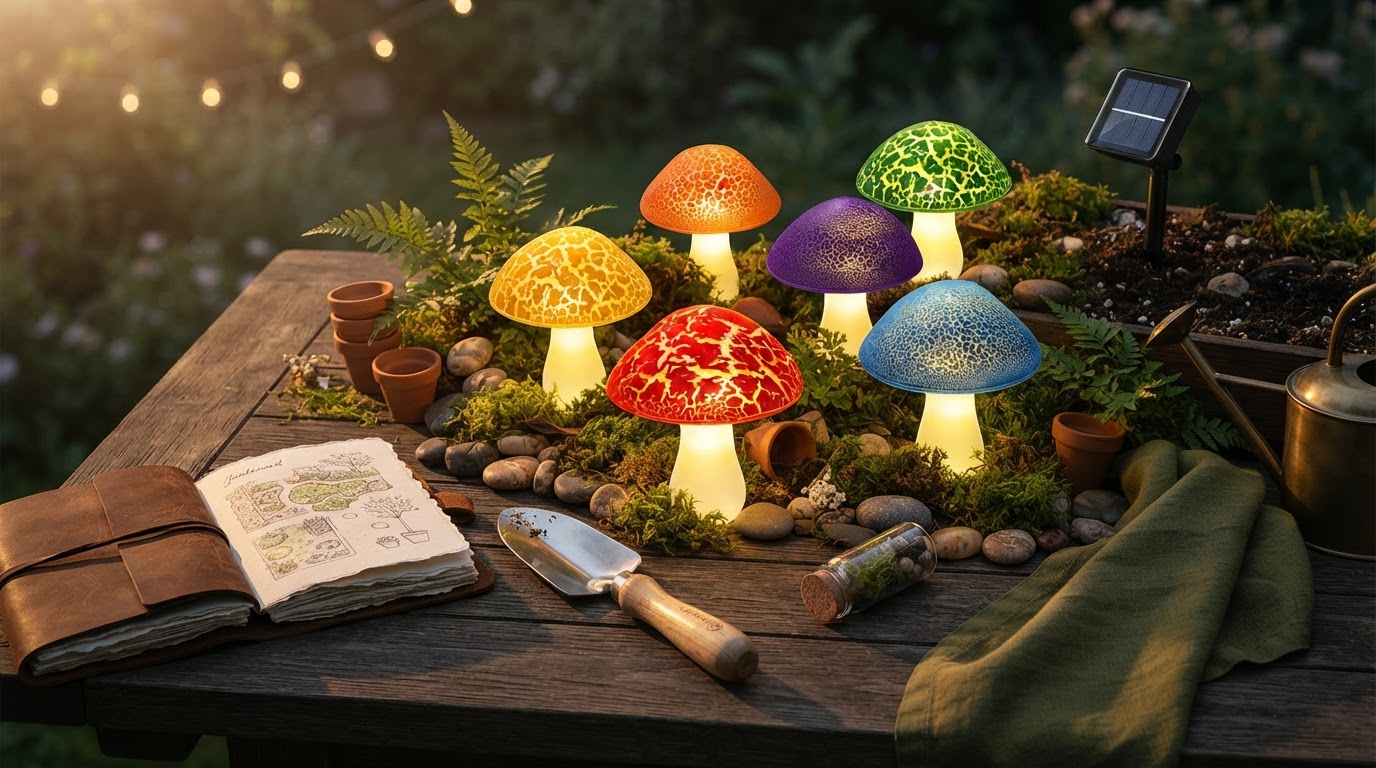
Enhancing Fairy Garden Mushroom Lights for Nighttime
 Daniel OkaforField Tester
October 6, 2026. This review examines the practical integration of fairy garden mushroom lights into established outdoor miniature landscapes. I wrote this for enthusiasts who want to maintain the whimsy of a woodland scene after the sun goes down without the hassle of wiring.
The Challenge of Miniature Landscape Illumination
When I first started building out my backyard miniature plots, I realized that traditional landscape lighting was far too bulky. Standard floodlights or large path stakes completely dwarf a fairy-scale house or a mossy knoll, ruining the forced perspective that makes these gardens charming. I spent weeks trying to hide thick wires under mulch, only for them to be kicked up by birds or damaged by moisture. According to a product review by Michelle's Click List on YouTube, the primary appeal of specialized solar mushroom lights is their ability to provide high-efficiency solar panels and automatic operation without any electricity or maintenance. This is the exact solution needed when you are working in tight, sensitive garden beds where you don't want to be digging trenches for cables every time you move a plant.
I tested this for two full weeks in a damp corner of my garden that gets about six hours of direct sunlight. The struggle with fairy garden lighting is often the balance between aesthetics and durability. Many decorative pieces look great on a shelf but fail the first time a heavy rain hits. I noticed that many enthusiasts on Pinterest prioritize the 'glowing mushroom' look for walkways, but if the stakes aren't sturdy, they lean and look messy within days. In my testing, the height of the stake matters immensely; it needs to be tall enough to clear the ground cover like creeping thyme, but short enough to blend with toadstool solar lights that might be positioned nearby for variety. The goal is a layered effect, not a single line of identical soldiers.
Performance and Integration in the Field
What surprised me: the light output was significantly warmer than the harsh blue-white LEDs I’ve used in the past. When I integrated these into a section featuring warm white mushroom garden stakes lights, the color temperature matched perfectly, creating a cohesive glow rather than a disjointed light show. I set up a cluster of nine lights around a miniature oak stump. Day three is where I noticed the efficiency of the sensors. Even as the autumn shadows lengthened, the lights triggered exactly at dusk without flickering. The waterproof construction held up through a localized thunderstorm that flooded my lower flower beds, which is a common failure point for cheaper decorative solar kits.
Here's the moment it earned its place: I had a heavy layer of leaf litter partially covering one of the smaller mushrooms. Despite the obstruction, the light continued to glow for a solid eight hours into the night. This reliability is vital when you are using solar fairy mushroom stakes to define a path that people actually walk near. If one light goes dark, the whole 'fairy trail' effect is broken. I also experimented with the different lighting modes mentioned in the YouTube review. While the flashing modes might work for a holiday display, I found the steady-on mode best for a naturalistic fairy garden. It makes the mushrooms look like bioluminescent fungi rather than a blinking airport runway. I found that mixing these with cute solar lights for flower beds scraps helped fill in the dark gaps between the larger garden features, creating a sense of depth that a single light source simply can't achieve.
Selection and Placement Strategy
Choosing the right fairy garden mushroom lights requires looking past the initial 'cute' factor and checking the technical resilience. You want a set that offers multiple mushrooms per solar panel to reduce the number of panels cluttering your garden view. What I'd do differently next time is spend more time prepping the soil; if the ground is too hard, you risk snapping the stakes during installation. Soften the earth first to ensure the mushrooms sit at varying heights, which looks much more organic in a woodland setting.
When you are evaluating a set for your own garden, use this framework to ensure they last through the season:
- Verify the waterproof rating to ensure the internal electronics are protected from ground-level moisture and irrigation.
- Check the lead wire length between the solar panel and the first mushroom to ensure you can hide the panel in a sunny spot while the lights sit in the shade.
- Look for sets that include at least 8-9 mushrooms to provide adequate coverage for a standard 3-foot fairy trail.
- Ensure the LED color temperature is 'Warm White' to avoid a clinical, artificial look in your natural landscape.
- Test the stake durability by gently pressing them into different soil types before committing to a final layout.
Shop Solar Mushroom Lights here