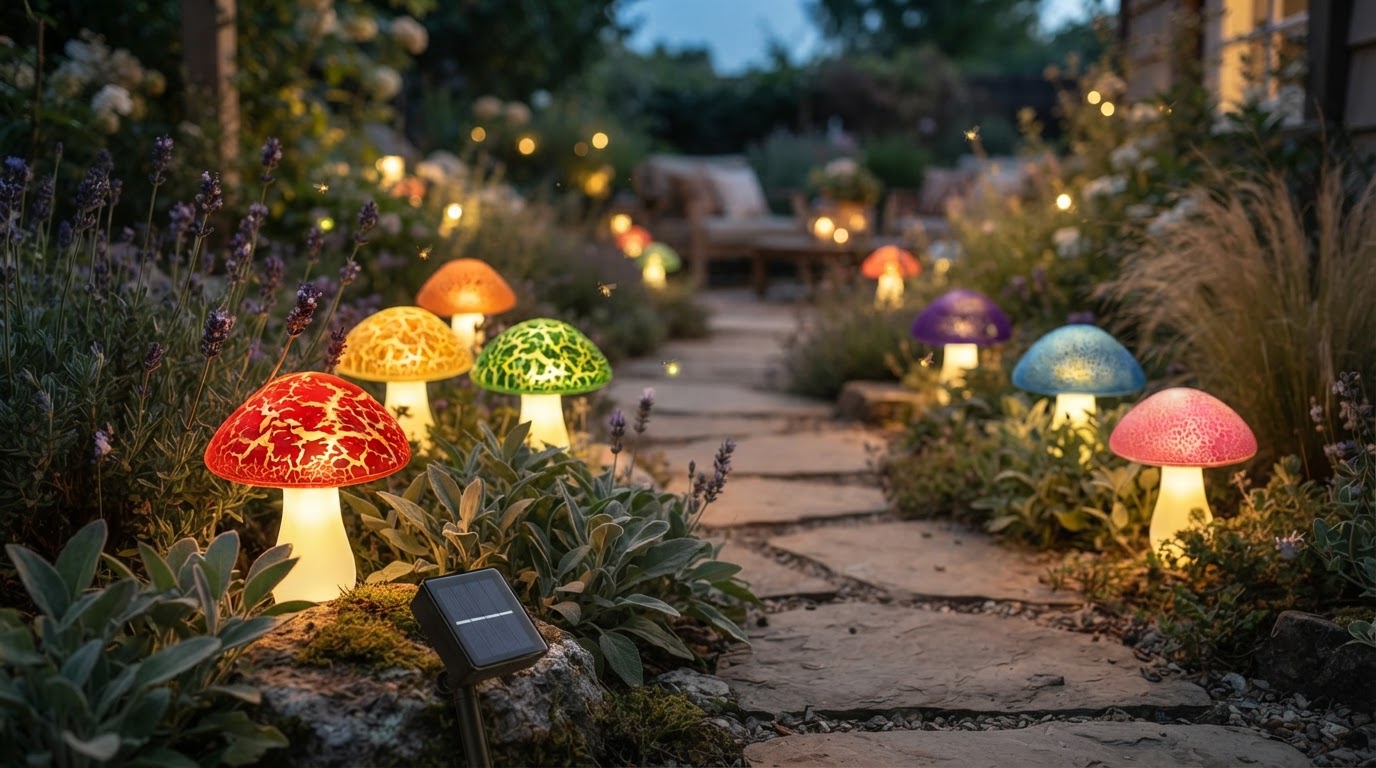
A 5-Point Review of Solar Mushroom Lights for Paths
 Sam VasquezBuying Guide Lead
August 21, 2026 — The rising consumer interest in organic garden aesthetics has positioned Solar Mushroom Lights as a primary alternative to traditional industrial bollards for residential walkways.
While standard solar stakes often prioritize utility over form, the current market shift toward softer, bioluminescent-inspired designs is undeniable. Landscape designers, as noted in recent reports by the International Dark-Sky Association, increasingly advocate for low-lumen, downward-facing fixtures that minimize light pollution while maintaining safe navigation for pedestrians. These fixtures serve as a bridge between functional safety and the whimsical elements found in whimsical fairy garden decor ideas, providing a distinct visual profile that standard plastic cylinders simply cannot match.
The 5-Point Path Performance Check

Photo by Tom Christensen on Pexels
When evaluating Solar Mushroom Lights for a high-traffic walkway, I look at five specific metrics: luminosity, weatherproofing, battery efficiency, spacing requirements, and ground stability. Most units in this category operate with a modest output of 5 to 10 lumens per head, which is sufficient for defining the edge of a path without washing out the surrounding foliage. For a standard 20-foot garden path, I recommend spacing these units approximately 3 feet apart to ensure a continuous visual guide. The IP65 waterproof rating is the standard you should look for, ensuring the internal circuitry survives heavy rain and irrigation cycles. Between a single-head stake and a multi-head string set, I'd go with the multi-head configuration for denser garden beds where you want to simulate a natural cluster of fungi. If you are working on a larger scale, you might consider how these integrate into a broader cottagecore garden design where layering different heights is essential. The monocrystalline solar panels typically found on these units require about six hours of direct sunlight to provide an eight-hour runtime. If you're on a budget, a single set of eight mushrooms provides more coverage than buying individual premium stakes. However, skip this if your path is heavily shaded by a dense tree canopy, as the integrated sensors will fail to charge the Ni-MH batteries sufficiently for overnight use. For those looking for more variety, exploring the best novelty solar lights for garden paths can help identify which shapes complement the mushroom silhouette.
Expert tip: To maximize the lifespan of the ground stakes, always pre-drill or soften the soil with water before installation; forcing the plastic spikes into compacted clay is the number one cause of structural failure during setup.
Here’s what I’d actually buy: for a standard walkway, I prefer the warm-white LED variants over the color-changing options, as they provide a more sophisticated look that mimics natural moonlight. If you are building a more intricate display, following a solar powered fairy garden mushrooms setup will help you hide the wiring effectively beneath mulch or decorative stones. The balance of price and performance makes these a solid choice for anyone looking to move away from the 'airport runway' look of traditional solar lights.