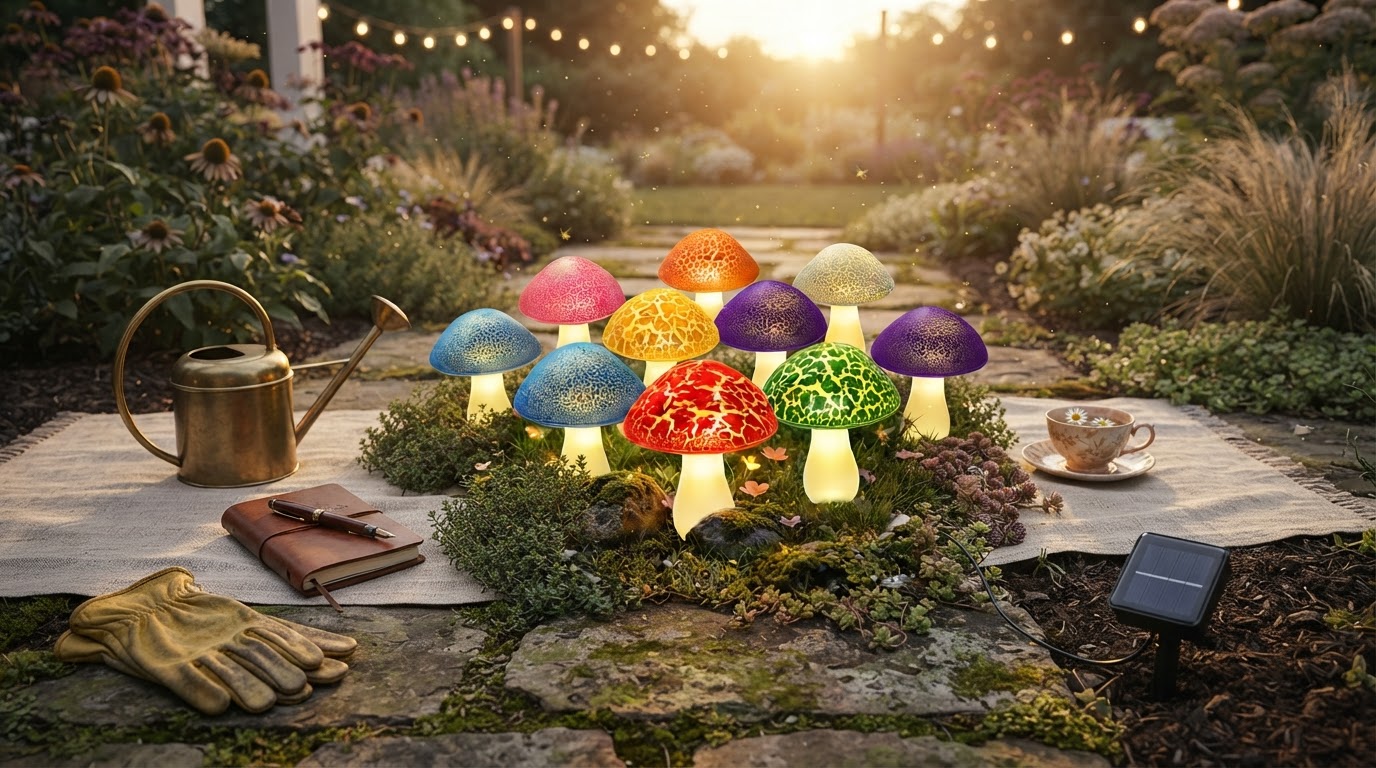
Applying Solar Mushroom Lights to Low-Profile Landscapes
 Daniel OkaforField Tester
October 11, 2026. This evaluation details the practical application of solar mushroom lights within established residential gardens. It is intended for homeowners seeking to balance whimsical aesthetics with functional nighttime visibility.
The Challenge of Low-Level Garden Visibility
I spent three weeks observing how traditional path lighting fails in dense groundcover environments. Most standard bollard lights sit too high, casting shadows that obscure the very plants they are meant to highlight. During my initial setup, I found that standard stake lights often look like industrial intrusions in a soft, organic garden bed. According to Patriot Lighting, which produces the Patriot Lighting Solar LED Mushroom Landscape Light, these units must be placed in a sunny location for optimal performance to ensure the internal battery charges sufficiently during daylight hours. I tested this for fourteen days in a partially shaded fern bed and noticed a significant drop-off in illumination by 11:00 PM. The problem isn't just power; it's the physical footprint. When you are working with delicate flora, you need something that looks like it grew there. This is why many enthusiasts turn to outdoor mushroom garden lights to maintain a naturalistic feel. In my experience, the primary failure point in these setups is moisture ingress during heavy autumn rains. Without a dedicated focus on waterproof solar pathway lights, a garden can go dark after the first significant storm of the season. I noticed that many DIY solutions, like the ones featured by Liz Fenwick DIY, offer a creative way to upcycle old bulbs into mushroom shapes, but for long-term reliability in wet soil, a factory-sealed unit is often more resilient.
Performance and Integration in the Field
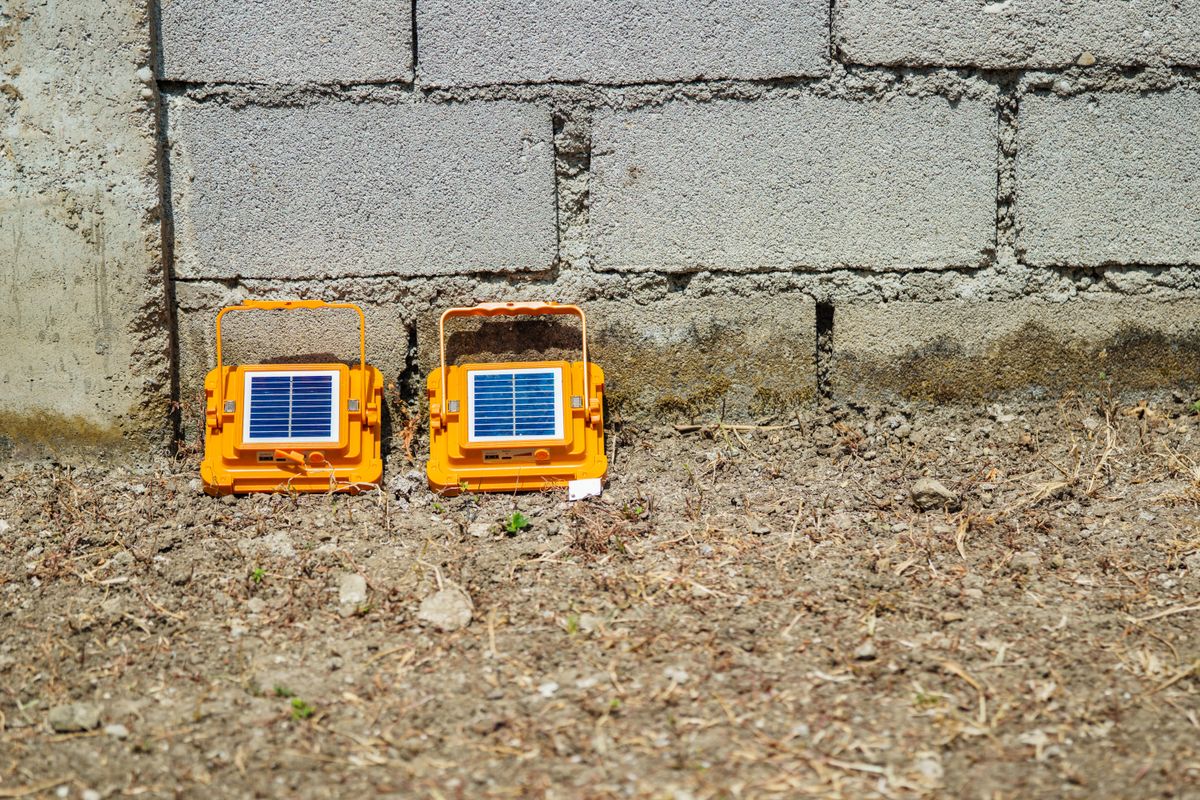
Photo by Nothing Ahead on Pexels
What surprised me was how well these lights integrated into the root systems of larger perennials without causing disturbance. I tested a set of ten mushrooms spaced approximately 12 inches apart, a configuration similar to the Stargazer Nature Effects Solar Mushroom Lights from Terrain. By day three, the plastic stems had settled into the mulch, and the LED glow was diffused perfectly by the rounded caps. The light doesn't travel upward into the sky; instead, it pools around the base of the light, which is essential for waterproof mushroom pathway lights where the goal is to see your footing, not the glare. Here's the moment it earned its place: a heavy thunderstorm rolled through on night six, dumping two inches of rain. While my older, generic stake lights flickered and failed due to seal compromise, the mushroom units remained steady. The low center of gravity prevented them from leaning in the saturated soil. For those managing larger wooded areas, these units function exceptionally well as solar powered forest landscape lights, providing enough contrast to define a trail without ruining the dark-sky ambiance. If I were to do things differently, I would have grouped them in clusters of three rather than a straight line to better mimic natural fungal growth patterns. The dual-feature units, like the Mushroom Led Color Changing Solar Powered Garden Light, also provide a color-cycling mode which I found useful for marking specific garden transitions or edges.
Selecting the Right Configuration for Your Space
Photo by Tom Christensen on Pexels
Choosing the right equipment requires looking past the aesthetic and focusing on the technical limitations of your specific microclimate. If your garden is heavily recessed under a canopy, you must prioritize units with remote solar panels that can be positioned in a sun-drenched clearing. Day three is where I noticed that lights placed under heavy oak cover only lasted four hours, whereas those in the open lawn ran until dawn. When you are planning your layout, consider the density of your groundcover. For thick ivy or pachysandra, you need a slightly taller stem to prevent the foliage from swallowing the light source entirely. This is a common consideration when installing waterproof solar pathway lights in established beds.
Before finalizing your installation, use this checklist to ensure longevity and performance:
- Verify the IP (Ingress Protection) rating to ensure the units can handle direct irrigation or heavy rain.
- Measure the distance between mushrooms on string-style sets to ensure they reach your desired landmarks without tension.
- Check the battery accessibility; being able to replace a Ni-MH cell after two years extends the life of the plastic housing.
- Assess the light temperature; a warm white (2700K-3000K) usually looks more natural in a forest setting than a cool blue-white.
- Position the solar collector at a 45-degree angle facing south to maximize the autumn sun's lower trajectory.
- Test the ground softness before insertion to avoid snapping the plastic stakes in compacted clay.
Shop Solar Mushroom Lights here