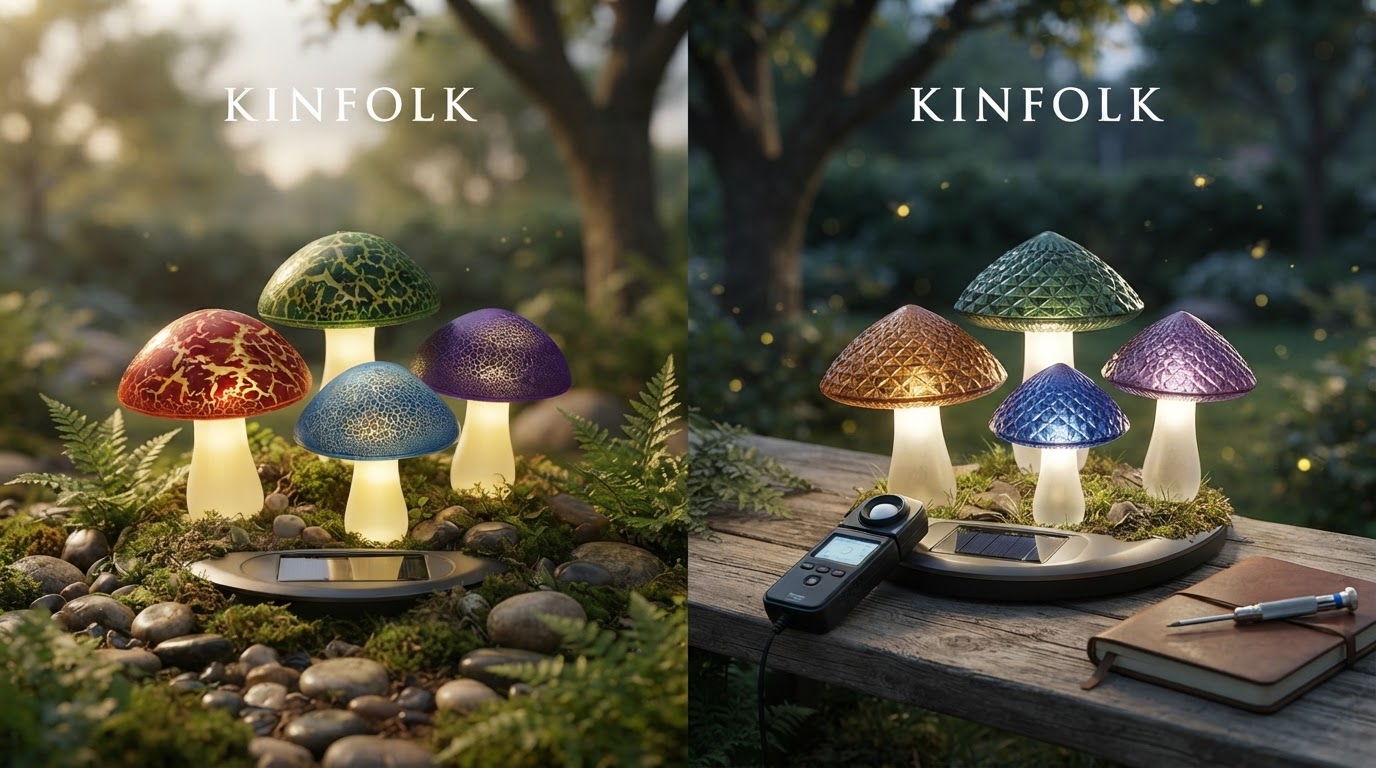
A Performance Framework for Solar Mushroom Lights
 Maya ChenContributing Editor
September 10, 2026 — The recent surge in decorative landscape illumination has pushed Solar Mushroom Lights into the mainstream, yet performance metrics remain widely misunderstood. While aesthetic appeal often drives consumer interest, the technical viability of these fixtures relies on specific irradiance thresholds and battery cycle efficiency that most retail descriptions gloss over.
The conventional wisdom says that any solar-powered stake will suffice for path lighting, but data from retailers like Terrain suggests a more complex reality. For instance, the Stargazer Nature Effects Solar Mushroom Lights utilize a 10-mushroom strand configuration with 12-inch spacing, a design that prioritizes atmospheric glow over functional high-lumen output. This specific spacing dictates the light's utility as a decorative boundary rather than a primary safety light, a distinction that is frequently lost in general consumer marketing.
The Three Performance Pillars
Here's the part nobody talks about: the relationship between spacing and effective lumen density. When evaluating Solar Mushroom Lights, the primary metric is not the peak brightness of a single diode, but the continuous runtime achievable after a standard six-hour charge cycle. Most consumer-grade units, including those featured by Workshop Tools, incorporate dual lighting features like automatic color changes, which significantly increase the parasitic draw on the internal battery compared to static warm-white LEDs. Run the math: a color-changing LED typically consumes 15-20% more power than a fixed-spectrum counterpart, meaning units without high-capacity NiMH batteries will likely fail before the four-hour mark in late autumn conditions. Furthermore, the physical build quality determines the longevity of the photovoltaic seal. While many users focus on the visual design of [toadstool garden lights solar](/blog/installing-toadstool-garden-lights-solar), the IP rating is the only valid predictor of whether the unit survives the first frost. A proper [waterproof solar mushroom stakes](/blog/waterproof-solar-mushroom-stakes) rating of IP44 or higher is non-negotiable for year-round reliability. Without this, moisture ingress in the base will inevitably lead to circuit corrosion, regardless of how well the [outdoor mushroom garden lights review](/blog/outdoor-mushroom-garden-lights-review) scores on initial aesthetics. Effective deployment also requires a [solar mushroom lights outdoor garden](/blog/solar-mushroom-lights-outdoor-garden) strategy that accounts for seasonal shade shifts, as even a 10% reduction in direct sunlight can lead to a 40% drop in overnight illumination duration.
Expert tip: To maximize the lifespan of your fixtures, clean the photovoltaic panels with a micro-fiber cloth every thirty days; even a thin layer of dust can reduce charging efficiency by 15% according to solar industry standards.
I’ll change my mind when manufacturers provide standardized PAR (Photosynthetically Active Radiation) equivalent data for these lights, but until then, consumers should focus on battery milliamp-hour (mAh) ratings as the ultimate arbiter of quality.
Sources
Photo by Angelo Capitanio on Pexels
- Stargazer Nature Effects Solar Mushroom Lights - Terrain
- DIY mushroom solar lights! ☀️ | Liz Fenwick DIY - Facebook
- Mushroom Led Color Changing Solar Powered Garden Light - WMSS27006