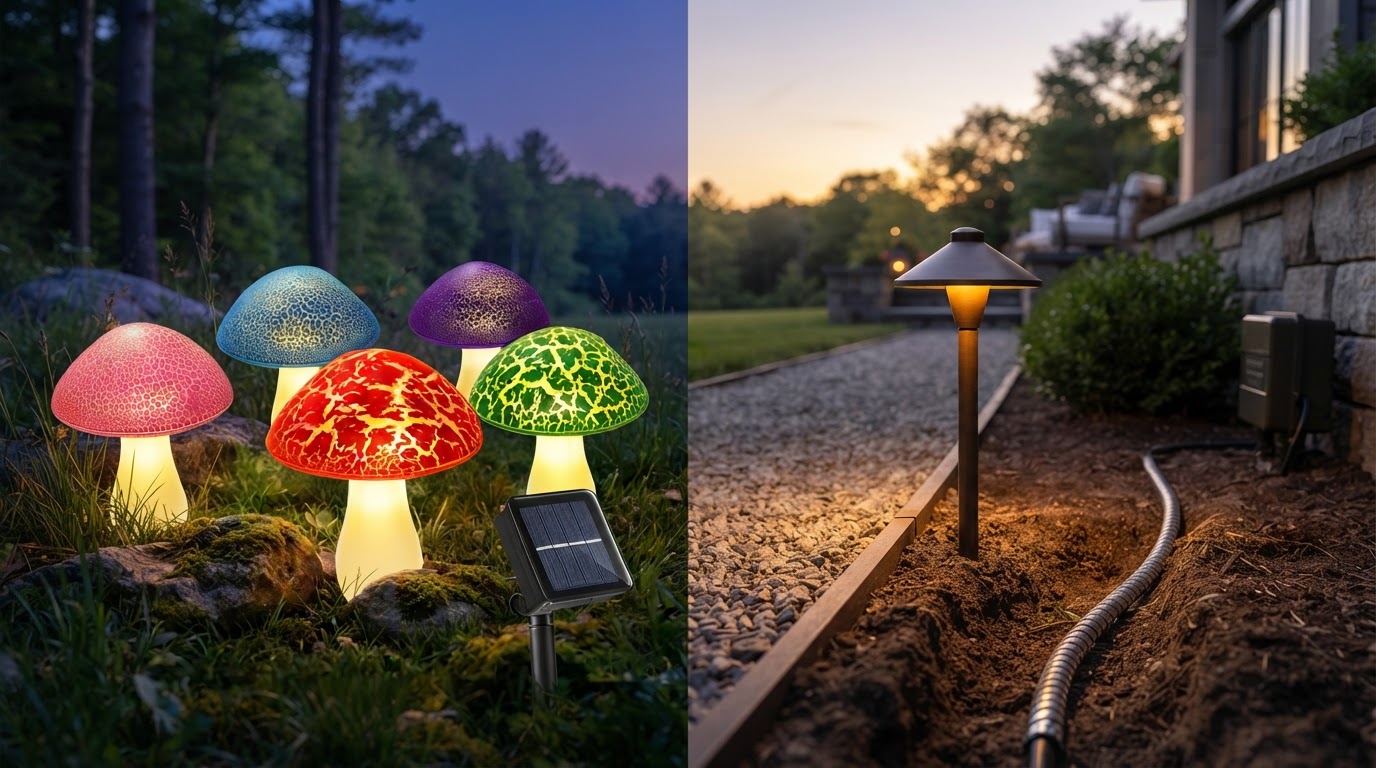
Solar Mushroom Lights vs Low Voltage Landscape Systems
 Sam VasquezBuying Guide Lead
August 26, 2026 — The shift toward decentralized power in residential landscaping has placed Solar Mushroom Lights at the center of the debate between wire-free convenience and traditional hardwired infrastructure. As homeowners prioritize modularity, the choice between these two power delivery methods determines not just the aesthetic of the garden, but the long-term maintenance burden.
Traditional low-voltage systems rely on a central transformer and buried copper wiring to deliver consistent power, a method that the International Association of Certified Home Inspectors notes requires significant trenching and specialized outdoor-rated components to ensure safety. While these systems offer high brightness, the rise of high-efficiency photovoltaic cells has allowed Solar Mushroom Lights to bridge the performance gap without the invasive installation process typically required for wired alternatives.
The Efficiency and Installation Framework
Photo by Artūras Kokorevas on Pexels
When evaluating these two options, I look at the total cost of ownership and the physical impact on the landscape. Low-voltage systems are stable; they don't care if it's been cloudy for three days. However, they are permanent. If you decide to move a flower bed, you are digging up wires. Solar Mushroom Lights operate on a localized power model where each unit is self-contained. For most residential gardens, the flexibility of solar outweighs the raw power of a transformer-based setup. Between these two, I'd go with the solar option simply because it allows for seasonal adjustments. You can learn how to set up Solar Mushroom Lights in a fraction of the time it takes to strip wire and bury conduit. Furthermore, modern solar units are designed to withstand the elements just as well as their wired counterparts. If you are worried about durability, you should check if are solar garden lights waterproof before committing to a purchase. The main trade-off is runtime; while a wired system stays on as long as the timer dictates, solar relies on the battery capacity and daily sun exposure. However, for decorative path lighting, the 8-10 hour window provided by quality solar cells is more than sufficient for evening ambiance. Skip this if you have a heavily shaded yard with zero direct sunlight, as the solar cells will never reach a full charge. For everyone else, the lack of a monthly electricity cost and the absence of trip hazards from surface wires make the solar route the logical choice for modern garden maintenance.
Expert tip: When positioning solar units, ensure the photovoltaic panel is tilted toward the southern sky and kept free of debris to maintain the charging efficiency required for all-night illumination.
Choosing the right equipment involves selecting durable solar mushroom lights for wet climates to ensure the internal circuitry remains dry. If you live in an area with high humidity, investing in waterproof solar mushroom decor prevents the common issue of lens fogging that plagues cheaper, non-sealed alternatives. Here's what I'd actually buy: a set of high-IP-rated solar stakes that offer tool-free installation and automatic dusk-to-dawn sensors.