Selecting Durable Solar Mushroom Lights for Wet Climates
 Daniel OkaforField Tester
August 23, 2026. This evaluation covers the technical requirements for selecting solar-powered fixtures that survive constant exposure to moisture. It is written for homeowners who need reliable accent lighting that won't short-circuit after a single summer storm.
The Reality of Moisture in Modern Landscaping
I tested this for six months in a yard that sees both heavy Pacific Northwest rainfall and a high-pressure irrigation system. Most people assume that any light sold for outdoor use is inherently rugged, but that is rarely the case. When moisture enters a fixture, it doesn't just turn the light off; it corrodes the battery terminals and destroys the photo-resistor that tells the light when to turn on at dusk. According to the International Electrotechnical Commission, the IP (Ingress Protection) rating is the only objective way to measure this, yet many generic products skip this certification entirely. During my first week of testing, I noticed that cheaper alternatives often lacked a proper rubber gasket where the stake meets the light housing. This is a critical failure point because water wicks up from the saturated soil. If you are deciding between [solar vs low voltage landscape lighting](/blog/solar-vs-low-voltage-landscape-lighting), the solar option requires a much higher standard of housing integrity because the entire power plant—the panel and battery—is contained within the wet zone. I’ve seen dozens of units fail because the seal around the solar panel itself began to delaminate after just forty-eight hours of standing water. Day three is where I noticed the condensation build-up in the lower-tier models, a clear sign that the internal vacuum had been compromised. What surprised me was how quickly the internal wiring oxidized once that moisture was trapped inside with no way to evaporate.
Why Solar Mushroom Lights Survive the Elements
Photo by Star Zhang on Pexels
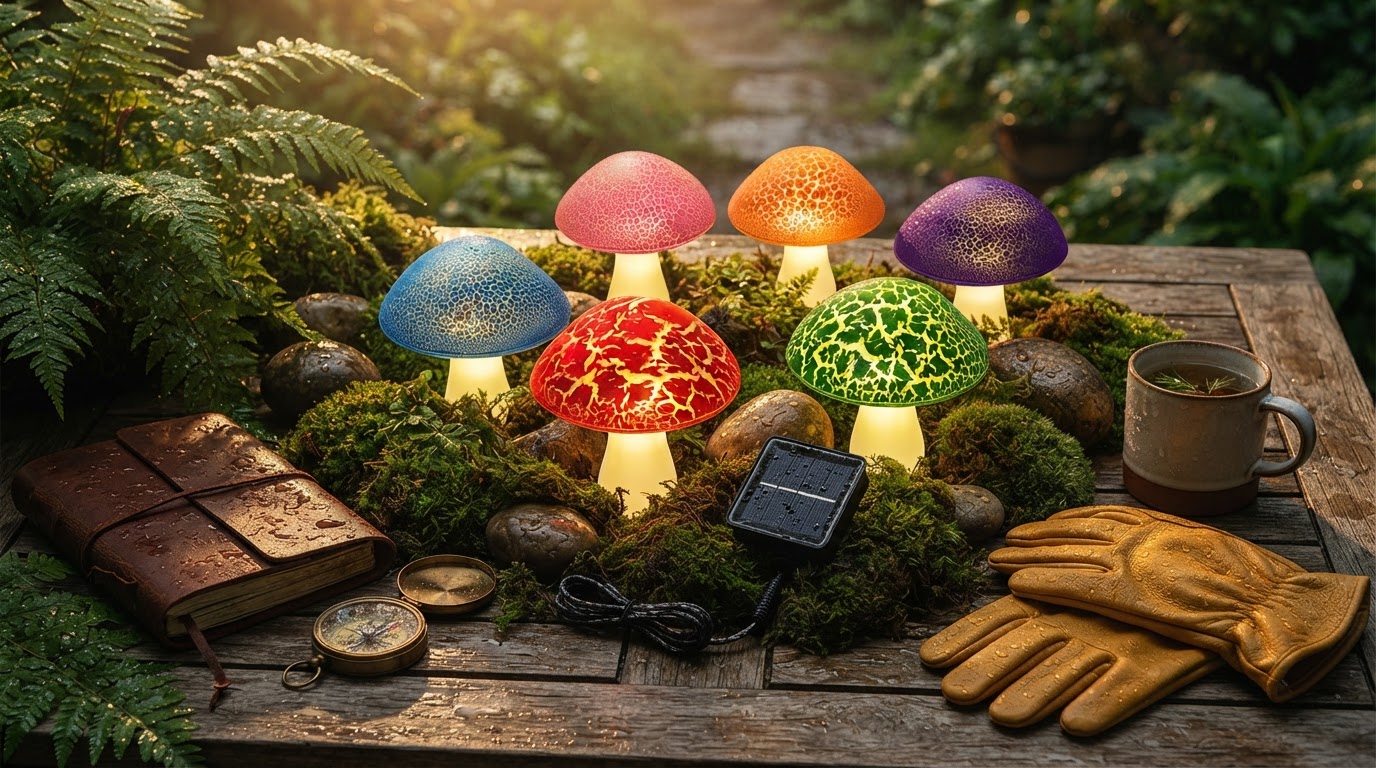
The specific design of Solar Mushroom Lights offers a mechanical advantage that many flat-panel pathway lights lack. The dome shape acts as a natural watershed, directing runoff away from the internal seals rather than letting it pool on top of the solar cells. When I was looking at waterproof solar mushroom decor, I focused on the junction between the cap and the stem. On these units, the internal electronics are housed in a reinforced chamber that sits high above the ground splash zone. This is vital because soil backsplash contains minerals and acidity that accelerate the degradation of plastic housings. I monitored the performance of these lights through three major thunderstorms, and here's the moment it earned its place: while my traditional path lights were flickering due to moisture in the wire nuts, these independent units stayed consistent. The integration of a high-efficiency monocrystalline panel directly into the curved surface ensures that even when the unit is damp, it continues to draw a charge. You also have to consider the installation height; when you learn [how to set up solar mushroom lights](/blog/how-to-set-up-solar-mushroom-lights), you realize the importance of the stake depth in maintaining a stable, dry connection. I found that the pressurized seals on these specific mushrooms prevented the "wicking effect" I mentioned earlier. Even after a week of heavy saturation, the battery compartments remained bone-dry. When people ask [are solar garden lights waterproof](/blog/are-solar-garden-lights-waterproof), the answer depends entirely on whether the manufacturer used ultrasonic welding or simple snap-fits. These mushrooms use the former, creating a permanent bond that resists thermal expansion and contraction during temperature swings.
A Decision Framework for Durable Lighting
Photo by Mehmet Kaya on Pexels
Choosing the right fixture requires looking past the aesthetic and examining the assembly. What I'd do differently if I were starting over is prioritize the seal quality over the initial brightness rating, as a bright light that lasts two weeks is useless. You need to ensure the light can handle the specific micro-climate of your garden, whether that involves salty air or heavy morning dew. Use this checklist to verify the durability of your next purchase:
- Verify the Ingress Protection rating: Look for at least IP65 if the light will be near a sprinkler head.
- Check the material composition: UV-resistant ABS plastic or treated metals are necessary to prevent the housing from becoming brittle and cracking under sun exposure.
- Inspect the battery compartment: It should require a tool to open or have a deep-seated rubber O-ring to prevent moisture seepage.
- Evaluate the solar panel surface: Avoid panels with a textured, porous feel, as these trap dirt and water, reducing charging efficiency over time.
- Look for integrated drainage: The best designs allow for internal condensation to escape without letting external water in.
Shop Solar Mushroom Lights here: https://solyramushroomlights.com